How to Ship Large Items
Updated 2026-08-039 min readPacking and sending
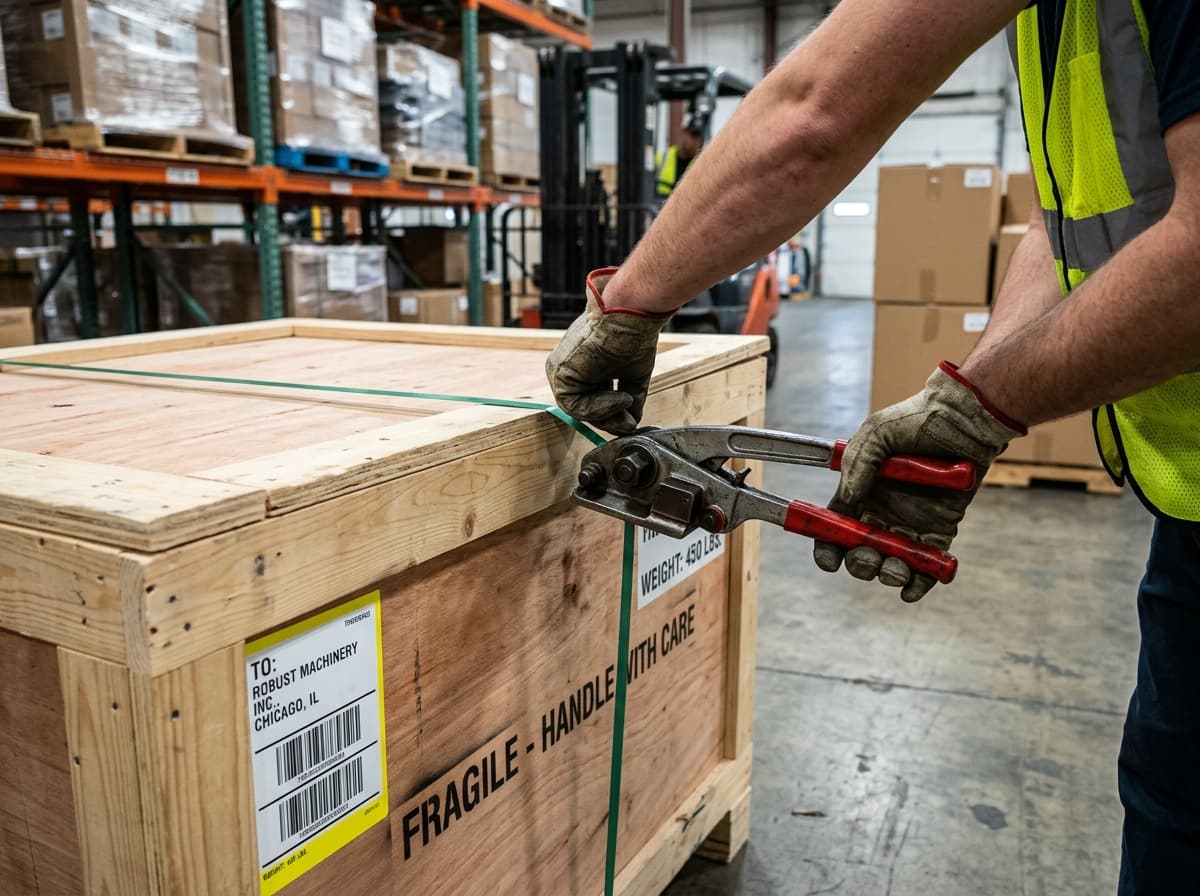
Parcel networks stop accepting items above roughly 150 pounds — around 70 kilograms — or above about 165 inches combined length and girth, or a single side above around 108 inches. Past any of those thresholds you are shipping freight, which is priced differently, delivered differently and packed differently.
Getting the classification right before you book is what prevents an expensive surprise, because a parcel carrier that accepts an oversized item bills for it afterwards.
Where the thresholds sit
| Measure | Standard parcel | Surcharged | Refused or freight |
|---|---|---|---|
| Actual weight | Under 50 lb / 23 kg | 50–150 lb / 23–70 kg | Over 150 lb / 70 kg |
| Longest side | Under 48 in | 48–108 in | Over 108 in |
| Combined length and girth | Under 130 in | 130–165 in | Over 165 in |
| Shape | Rectangular, corrugated | Cylindrical, non-corrugated | Unpackaged, unpalletised |
Combined length and girth is the measure people miss. Girth is twice the width plus twice the height, and combined length and girth adds the length to that. A box 50 × 30 × 24 inches has a girth of 108 and a combined figure of 158 — inside the limit, but well into surcharge territory. Our guide on calculating package dimensions works through the measurement.
The middle column is where most large-item shipping happens, and it is the expensive place to be. An additional handling charge plus an oversize charge plus a residential delivery charge, each with fuel applied on top, can exceed the base rate. Our guide on hidden shipping fees covers how they stack.
Parcel, pallet or specialist
Three routes, and the choice is mostly about weight and fragility.
Oversized parcel. For items inside the thresholds. Simple to book, tracked in detail, delivered to the door. Expensive per item once surcharges apply.
Palletised freight. The item is secured to a pallet, moved by forklift, and delivered kerbside. Far cheaper per kilogram, with a higher minimum charge and less granular tracking. This is the default for anything genuinely heavy.
Specialist or white glove. Two-person delivery, into the room of your choice, with assembly and packaging removal at the higher tiers. The right answer for furniture, appliances and anything one person cannot carry.
A rough rule: one heavy item goes freight, several light boxes go parcel. The crossover sits somewhere between 70 and 150 kilograms depending on how the weight is distributed.
How pallet freight is priced
Freight pricing works nothing like parcel pricing, and knowing the inputs makes quotes comparable.
Pallet size and count. Quarter, half or full pallet, and how many. Most quotes start here rather than at weight.
Weight, subject to a maximum per pallet.
Density or freight class. Lower density means more space consumed per kilogram, and pricing reflects it — the same principle as dimensional weight in parcels.
Distance and postcode. Remote and island destinations attract substantial surcharges.
Service level. Economy, next day, timed, and whether a tail lift is needed at either end.
That last one matters more than people expect. A tail lift is required wherever there is no loading dock or forklift, which is every residential address. Booking without one means the driver arrives with a pallet nobody can get off the vehicle, and the delivery fails.
Kerbside is the default
The single most common misunderstanding in freight delivery.
Standard freight is delivered kerbside. The driver brings the pallet to the edge of the property and no further. They are not obliged to carry it inside, up steps, or through a door, and on most contracts they are not permitted to.
If the item needs to go indoors, you are buying one of these:
Threshold delivery — inside the first doorway, no further.
Room of choice — into a specified room, usually two-person.
White glove — room of choice plus unpacking, assembly and packaging removal.
Each tier costs more. Decide before booking, because upgrading after the vehicle is dispatched is either impossible or expensive.
Check the access too. A pallet lorry needs a road it can turn in and stop on. Narrow lanes, low bridges, weight-restricted roads and unmade tracks all cause failed deliveries, and a failed freight delivery costs close to the full rate.
Packing for a pallet
Different from parcel packing, because the failure modes are different.
Choose the right pallet size and keep the load inside its footprint. Overhang is the leading cause of freight damage — anything projecting past the pallet edge is what another pallet hits.
Distribute weight evenly and keep the centre of gravity low. Heavy at the bottom, light on top.
Shrink-wrap thoroughly, several turns, including over the pallet deck so the load is bonded to the pallet rather than sitting on it.
Strap it with banding over the top and around the pallet for anything heavy. Shrink-wrap holds a load together; strapping holds it down.
Corner boards protect edges from strap pressure and from adjacent pallets.
Label every side. A pallet is approached from whichever direction the forklift is on, and a single label on one face is frequently invisible.
Keep the total height inside the carrier's limit, commonly somewhere between 1.8 and 2.2 metres including the pallet.
When to build a crate
Crating costs considerably more than palletising, and it is worth it in four situations.
Glass, stone and ceramics, where a knock is fatal.
Machinery with precise alignment, where flex causes damage that is invisible until commissioning.
High-value artwork and antiques, where the insurance requires it.
Anything irregular that cannot be stacked or strapped safely on an open pallet.
A crate is a rigid timber box, and it protects against side impact and stacking in a way shrink-wrap cannot. For international shipments, note that untreated timber packaging is restricted almost everywhere on biosecurity grounds — crates need heat-treated wood carrying the appropriate mark, and untreated timber is a common cause of a shipment being refused entry.
Disassembly is usually worth it
Taking something apart before shipping reduces cost on three axes at once: dimensions, handling classification and damage risk.
Table legs off, mirrors and glass removed and packed flat separately, doors removed from cabinets, handlebars turned on a bicycle. Each reduces the enclosing rectangle the carrier measures.
Two habits make reassembly painless. Bag and label the fasteners and tape the bag to the part it belongs to. And photograph each step as you disassemble, so the sequence is recorded.
Where an item cannot be disassembled, protect every protruding part specifically — protrusions set the measured dimensions and they are what breaks.
Insurance on freight
Freight liability is normally limited by weight, not by value. That is a genuinely important difference from parcel shipping.
A liability limit expressed per kilogram means a light valuable item is barely covered at all. A 20-kilogram antique worth several thousand is protected to a fraction of its value under standard terms.
For anything valuable, buy declared value cover or separate transit insurance, and expect the insurer to require adequate packing — professional crating is frequently a condition rather than a suggestion.
The sender files any claim, as with parcels, and the deadlines are short. Photograph the packed pallet from all four sides before collection, and inspect on delivery before signing. Signing clean for a damaged pallet substantially weakens the claim, and noting damage on the delivery note is the single most valuable thing you can do at that moment.
Our guide on lost or damaged package claims covers the filing process.
Selling large items online
The economics of large-item e-commerce are dominated by shipping in a way smaller categories are not, and three decisions determine whether it works.
Quote shipping separately, never free. A flat free-shipping policy across a catalogue containing large items subsidises them from the margin on everything else. Quote large items individually, or set them to a separate shipping profile with their own rates — our guides on offering free shipping without losing profit and Shopify shipping integration cover how to structure it.
Exclude remote destinations explicitly. A remote area surcharge on a pallet is far larger than on a parcel, and a handful of postcodes can consume the margin on a month of sales.
State the delivery tier in the listing. Buyers who expect a sofa carried upstairs and receive a kerbside drop leave a complaint regardless of what the terms said. Saying "kerbside delivery, please arrange help to move it inside" in the listing prevents nearly all of it.
Returns are the other half. A large-item return costs roughly what the outbound cost, and often more because the customer repacks badly. A restocking policy on large items is normal practice for that reason.
When a courier is the wrong answer entirely
For some large items, a carrier is not the best route.
Local moves — a single item within a city — are often cheaper and faster with a man-and-van service than with a freight network, because there is no consolidation step.
Furniture and appliances frequently ship better through specialist two-person delivery firms who do this exclusively.
Vehicles, boats and machinery need specialist transport, not freight.
Whole-house quantities are a removals job, priced by volume and time rather than by pallet.
Get quotes from both a freight network and a specialist. The gap is frequently large in both directions depending on the item and the distance.
Tracking a freight shipment
Freight tracking is milestone-based rather than continuous. Expect a handful of events — collected, at depot, in transit, out for delivery — rather than the dozen scans a parcel produces.
Longer gaps are normal, particularly on economy services where a pallet waits for a full vehicle heading in its direction. A quiet period of two or three days on a freight shipment is not the signal it would be on a parcel, as our guide on tracking that is not updating explains.
Most freight consignment numbers work on our home page where the carrier is in the index. If yours does not resolve, our guide on identifying a carrier from a tracking number covers reading the format.
Getting a quote you can rely on
Freight quotes vary more between providers than parcel quotes do, and a low quote frequently becomes an average invoice once the omissions surface.
Supply the same six facts to everyone you ask: exact dimensions including any overhang, gross weight including the pallet, both postcodes, whether a tail lift is needed at each end, the delivery tier you want, and the declared value. A quote given without all six is an estimate, not a price.
Then check what the quote excludes. Tail lift, timed delivery, waiting time beyond a free period, redelivery after a failed attempt, and storage if the consignment cannot be delivered are all commonly charged separately.
Ask specifically about waiting time. Freight drivers allow a limited free window at each end, often 15 to 30 minutes, and charge by the hour beyond it. A delivery where nobody is ready to receive the pallet runs into this quickly.
Finally, compare a freight broker against a direct carrier. Brokers aggregate volume and frequently beat direct pricing on single pallets, at the cost of an extra party in the chain when something goes wrong.
Before you book
Measure the item including every protrusion, and calculate combined length and girth. Weigh it. Decide parcel, pallet or specialist from the thresholds above. Check vehicle access at both ends and book a tail lift for any address without a dock. Choose the delivery tier deliberately, because kerbside is the default. Pack inside the pallet footprint, wrapped and strapped. Insure to value, not to weight. Photograph everything, and inspect before signing.
Get those right and large-item shipping is straightforward. Nearly all of the horror stories come from one of them being skipped — usually the tail lift, or the assumption that kerbside meant indoors.
Once it is collected, follow the consignment number on our home page and check the delivery date against your own availability, because a freight delivery that nobody is there to receive is charged again.