How to Track a Temu Order
Updated 2026-08-039 min readMarketplace orders
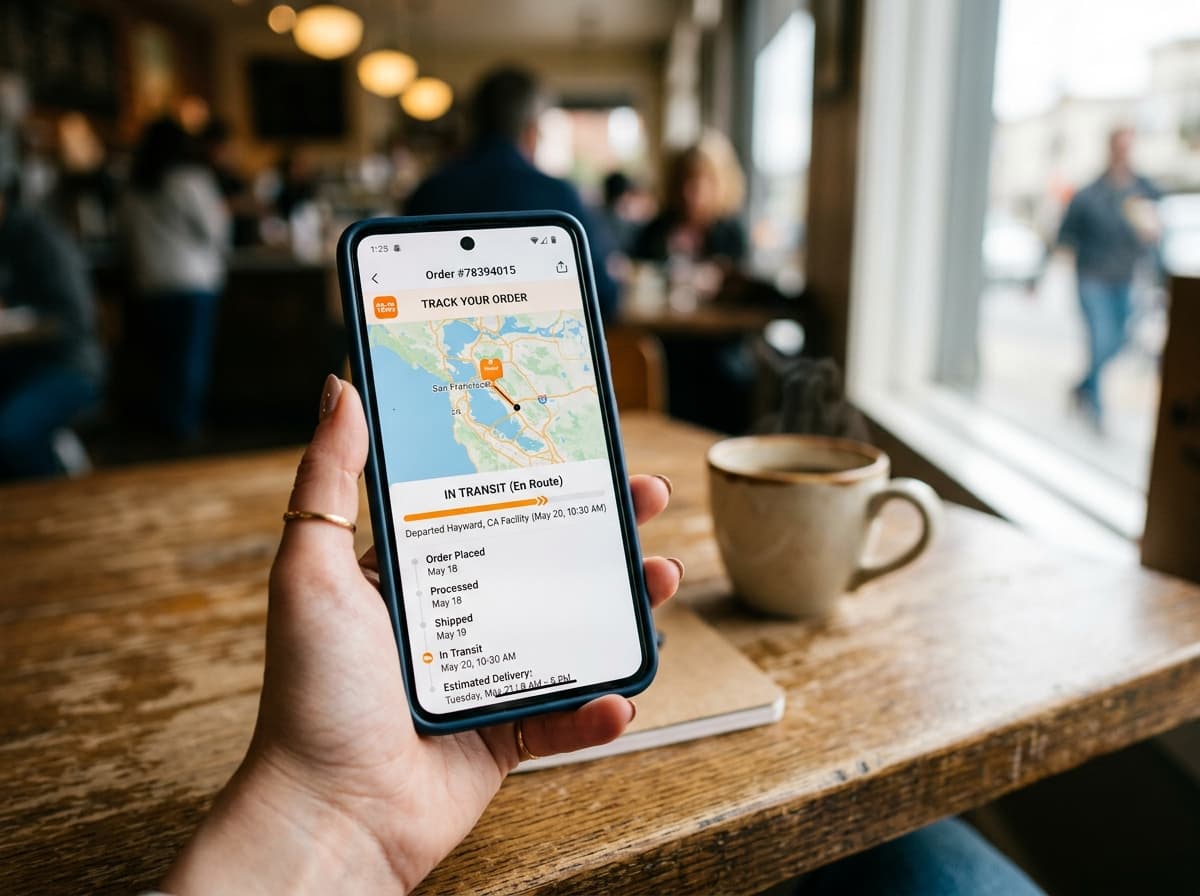
Temu tracking has one dominant characteristic: the number arrives immediately and does nothing for a week. That gap is where nearly all the confusion lives.
The parcel is real and the number is real. It's sitting in a warehouse waiting for enough other parcels to fill an air container, and warehouses don't scan things while they wait.
The batching problem, explained
Temu's prices depend on shipping in bulk. Individual parcels flown separately would cost more than most of the items are worth, so Temu pools orders and moves them together.
That pooling takes time. Your parcel is packed, labelled, and then parked until the batch is full and a flight is booked.
Typical wait before the first real scan: 5 to 10 days. Longer during sale periods, when volume outpaces flight capacity.
During that window the order shows as shipped and the tracking number returns nothing. Both are accurate. Our guide on tracking numbers that show nothing covers why a valid number can be silent.
Where to check
The app or website account, under Your Orders. Not email — Temu emails lag and refer to individual parcels rather than the whole order.
Open the order and look for the tracking entry. If the order split, there'll be several, each with its own status and its own estimated date.
The app usually shows a friendlier summary than the raw carrier tracking. If you want the underlying scan history, take the number from the order page and paste it into the tracker on our home page with the carrier field empty.
Why your order arrived in three boxes
Temu lists products from thousands of separate suppliers. Items in one order frequently come from different factories in different cities.
Temu ships each supplier's items when they reach the consolidation hub rather than holding everything until the slowest arrives. So a four-item order can become three parcels, dispatched days apart, arriving across two weeks.
Each gets its own tracking number and its own delivery estimate. Judging the whole order by the first parcel's arrival is what makes the rest feel late.
What to do: open the order page and count the logistics entries before deciding anything is missing.
The carriers you'll meet
Temu's international leg usually runs through a consolidator, then hands over to a local operator.
YunExpress numbers start YT. 4PX numbers start with 4PX or a two-letter code. Some parcels travel under Cainiao with an LP prefix, and a few go through the postal system with a China Post number.
At the destination, the parcel passes to a domestic carrier — USPS in the United States, Royal Mail or a regional courier in Britain, Australia Post in Australia, Canada Post in Canada.
That handover often produces a second tracking number and freezes the first. Our guide on parcels changing carrier mid-journey explains what to look for.
Our reference on tracking number formats by carrier covers the prefixes if you want to identify yours.
The realistic timeline
Add the batching wait to the shipping estimate, because the estimate measures from dispatch.
| Stage | Typical duration | Scans |
|---|---|---|
| Order to warehouse | 1 to 3 days | none |
| Batching wait | 5 to 10 days | none |
| International flight | 3 to 7 days | one or two |
| Customs | 3 to 5 working days | one or two |
| Local delivery | 2 to 5 days | several |
Door to door that's commonly 14 to 25 days on standard shipping, and Temu's express options compress the middle stages rather than removing the batching wait.
Reading the statuses
"Order placed" — nothing has moved.
"Shipped" — a label exists. The parcel may still be in a warehouse. This is the status that misleads people most.
"In transit" — genuinely moving, or waiting between scan points. Long gaps here are normal.
"Arrived at destination country" — the handover point. Expect a pause for customs and induction into the local network.
"Out for delivery" — today, and the one status with a deadline. If it doesn't arrive, a return countdown starts at the depot.
The status guide on our home page gives the normal wait for each state, which is the part the app doesn't tell you.
The delivery guarantee is worth knowing
Temu operates a delivery promise on many orders, and it's more generous than most marketplaces.
If a parcel misses its promised window, you're typically credited without needing to prove anything or wait for the parcel to be declared lost. The credit is usually applied automatically or claimable from the order page.
That changes the calculation. On most marketplaces a late parcel means waiting; here it often means waiting and getting compensated. Check the order page when the promised date passes rather than assuming nothing can be done.
Warning: the promise usually applies to the date shown at checkout, not to a revised estimate that appeared later. Screenshot the original promised date when you order.
When something is genuinely wrong
No scans 12 days after "shipped." Past the normal batching window. Raise it in the app.
Stuck at customs beyond two weeks. Usually an unpaid charge, and the notification often lands in spam. Our guide on parcels stuck in customs covers how to check.
Delivered but nothing arrived. Work through the seven steps in our guide on tracking that says delivered when nothing came before reporting it, because most of these turn up within 48 hours.
Wrong or missing items. This is a seller problem rather than a carrier one. Report through the order page with photographs of the parcel as it arrived.
Why the app and the carrier disagree
It is common for the Temu app to show one status while the carrier's own record shows another, and neither is wrong.
The app displays a simplified journey built from carrier data plus Temu's own internal milestones. Some of those milestones — batching, hub transfers, export bookings — have no equivalent carrier scan, so the app can show progress the carrier does not.
The reverse happens too. A carrier scan can land hours before the app ingests it, so the raw tracking is sometimes ahead.
Which to trust: the carrier record, for anything factual. The app's summary is friendlier, but the carrier's scan history has the timestamps and locations you would need in a dispute.
Take the number from the order page and check it directly. If the app says one thing and the scan history says another, the scan history is the document that counts.
Temu versus AliExpress, practically
Both are Chinese marketplaces shipping to the same doors, and the differences are worth knowing if you use both.
Temu batches harder. The wait before the first scan is typically longer — five to ten days against AliExpress's three to seven — because Temu pools more aggressively to keep prices down.
Temu moves faster once shipped. It uses paid express lanes more often, so the flight and delivery stages tend to be quicker.
Temu's delivery promise is stronger. AliExpress has buyer protection against non-delivery; Temu additionally compensates for lateness, which AliExpress generally does not.
AliExpress splits less predictably. Sellers there control their own shipping, so a multi-item order from one seller often travels together. Temu splits by supplier almost every time.
Net effect: similar total journey times, with Temu front-loading the wait and AliExpress spreading it out. Our guide on tracking an AliExpress order covers that side in detail.
Deadlines and evidence
Temu's purchase protection window is shown on the order page, and it's the date that actually matters.
Once it closes the order completes and the money is gone, whatever arrived or didn't. Report problems inside it — a report can be withdrawn if the parcel appears, but a closed window cannot be reopened.
Screenshot the order page and the tracking page the first time you feel uneasy. Marketplace records archive and carrier scan history is purged 30 to 120 days after the last event, so the evidence often disappears just as a dispute gets serious.
Why express shipping helps less than you expect
Paying for faster shipping on Temu produces a smaller improvement than the same upgrade elsewhere, and the reason is structural.
The batching wait happens before the shipping service applies. Your parcel still sits in the warehouse until a batch fills, whichever option you chose at checkout. Express compresses the flight and the delivery legs, not the queue in front of them.
So an upgrade that promises to halve the shipping time often shortens the total wait by only a few days, because it is only acting on part of the journey.
When it is worth paying: when the express option explicitly includes priority consolidation, which some markets offer. That skips the batching wait rather than just speeding the flight, and it is the only upgrade that changes the front half of the timeline.
When it is not: for a small order where the difference is three or four days on a fortnight. The money is better spent on the item.
Customs charges on cheap orders
Temu's low prices mean most orders sit below the threshold where duty applies, which is why the majority arrive without a bill.
Larger orders can cross it, and the charge is calculated on the item price plus shipping rather than the item alone. Our guide on customs duties explains how the three separate charges stack up.
If a parcel goes quiet at customs, check the carrier's own import charges page with the tracking number before assuming it's a queue. An unpaid charge holds a parcel indefinitely, and carriers return unpaid parcels after 21 to 30 days.
Returns and their own tracking
A Temu return generates a new tracking number, separate from the outbound one. Tracking the original number to see whether your return arrived shows the original delivery and nothing else.
Many returns use a QR code scanned at a drop-off point rather than a printed label. In that case no number exists until you hand the parcel over, and the receipt printed at the counter carries it.
Photograph that receipt. It is the only evidence the return was made, and a refund dispute without it is very difficult to win.
Return windows are shown on the order page and are usually generous, but the refund is triggered by the return being scanned as received, not by you posting it. Allow the return journey time before chasing the money.
Cancelling before dispatch
The batching wait has one useful side effect: there is usually a real window in which an order can still be cancelled.
Because the parcel sits in a warehouse for several days after the "shipped" notification, orders can often be cancelled or amended later than the status suggests. The app decides this rather than the carrier, and the cut-off is generally the point at which the batch is manifested for a flight.
If you have ordered by mistake or changed your mind, try the cancellation in the app immediately rather than assuming "shipped" means it is gone. The worst outcome is that it refuses.
The same applies to address corrections. An address fixed before the batch leaves China costs nothing; one discovered after the parcel has landed usually means a failed delivery and a return.
Getting the expectations right
Almost every complaint about Temu tracking comes down to one thing: treating the "shipped" status as the start of the journey when it's really the start of the wait.
Count from the first genuine movement scan, not from the notification. Expect two silent stretches — the batching wait and the flight — and check the order page rather than your inbox.
Every carrier in the chain has a page in our courier directory with its realistic transit windows. Read the one for your consolidator once, and the fortnight of silence stops being a mystery and becomes the thing you already knew was coming.