How to Track an AliExpress Order
Updated 2026-08-029 min readMarketplace orders
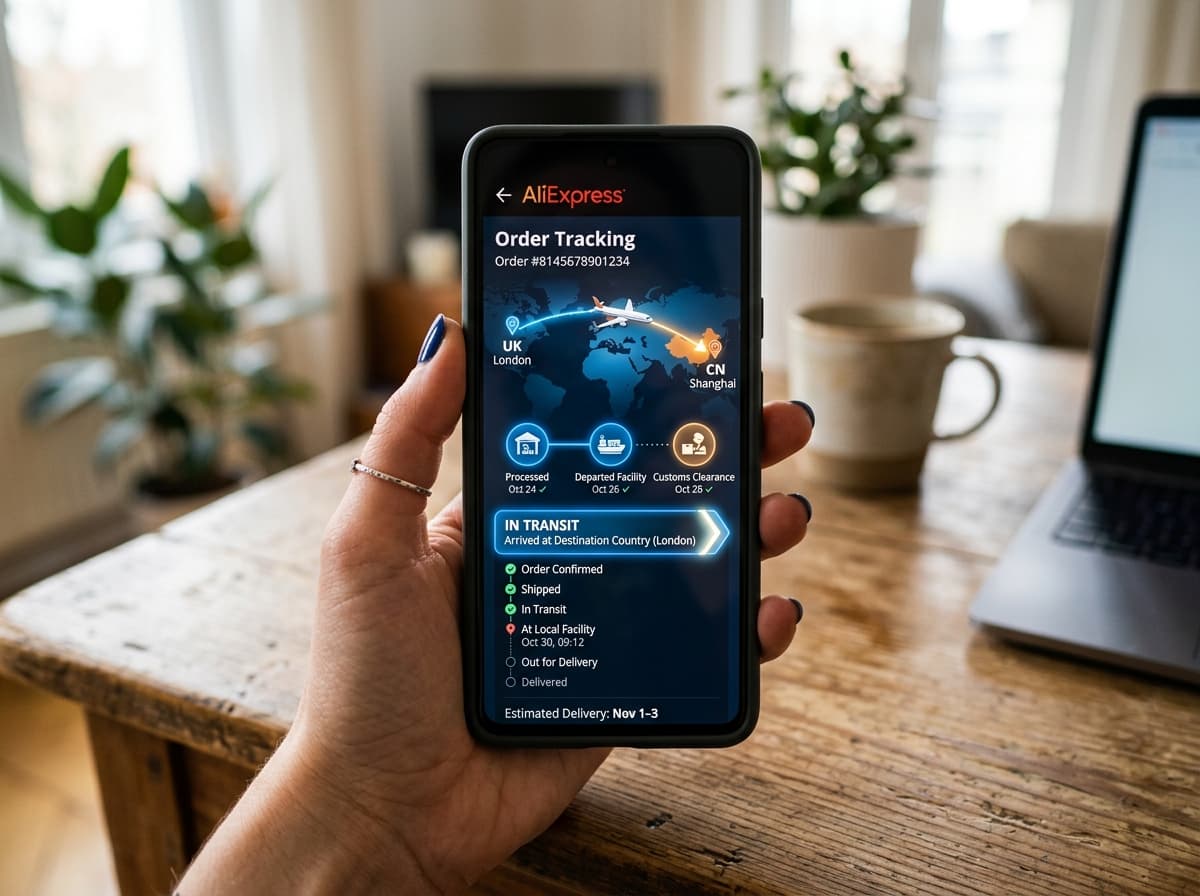
AliExpress tracking confuses people more than any other kind, and it isn't because the system is broken. It's because a single order can involve three carriers, two tracking numbers, and a three-week stretch where genuinely nothing happens.
Once you know the shape of the journey, most of the worry disappears. Here's how it actually works.
Where to find the number
Check the order page in your account, not your email. AliExpress emails lag, and sellers frequently update the number after dispatch without sending a new notification.
Open My Orders, find the order, and look for "Track order" or the logistics section. That's the live version.
If you see a number there but the shop hasn't marked the order as shipped, the number is a placeholder. Sellers generate these to start the shipping clock, and there's no parcel behind it yet.
Why the number doesn't work for days
This is the most common complaint, and it's the system working as designed rather than failing.
A seller creates a shipping label — and therefore a tracking number — when they book the shipment. The parcel then goes to a consolidation warehouse, where it waits for enough other parcels to fill an air container heading to your region.
That wait is normally 3 to 7 days, and nothing is scanned during it. The number exists, the parcel exists, and no scanner has met either.
Wait window: seven days from the "shipped" notification before a silent number means anything at all. Under that, there's nothing to investigate.
Reading the carrier from the number
AliExpress uses several logistics providers, and the prefix tells you which one — along with a fairly accurate idea of how long you'll wait.
LP and 14 digits is Cainiao, Alibaba's own logistics arm. This covers most AliExpress Standard Shipping. Expect 15 to 30 days.
AE and digits is AliExpress Standard Shipping under its own branding, handled by Cainiao underneath. Similar timing.
YT is YunExpress, a consolidator that tends to run slightly faster on European and North American routes.
4PX at the start is 4PX, another major consolidator.
LX, RA, CP or UA ending in CN is China Post — the postal system rather than a courier. This is the cheapest option and the slowest, at 30 to 60 days, with very few scans along the way.
Our guide on identifying a carrier from a tracking number covers the prefixes in more detail if yours isn't listed here.
The journey, and where it goes quiet
An AliExpress parcel travels in four legs, and two of them produce no tracking at all.
Leg one — seller to consolidation warehouse. Domestic Chinese transport, usually 2 to 5 days. You might get one scan or none.
Leg two — the warehouse wait. The parcel sits until a container fills. This is the first long silence, typically 3 to 7 days with zero scans.
Leg three — the flight and customs. You'll usually see "Departed from origin country," then silence for a week or more while the parcel flies and clears customs at the other end. This is the second long silence and the one that worries people most.
Leg four — local delivery. A domestic operator in your country takes over. In the United States that's frequently USPS, in Britain often Royal Mail or Evri, in Australia Australia Post.
That last handover is where the tracking number usually changes.
When one order has two numbers
The consolidator's number covers legs one to three. Once the parcel is handed to your local postal operator, that operator scans it into their own system with their own number.
Your original number freezes on a scan like "Arrived at destination country" or "Handed over to local carrier." It will never move again, and that's correct behaviour rather than a fault.
The second number sometimes appears on the AliExpress order page automatically. When it doesn't, paste the original into the tracker on our home page with the carrier field empty — many local operators keep the original reference in their system, so the lookup can still find the onward journey.
Pro tip: if you know the parcel has landed in your country, try the last few digits of the original number on your national postal operator's own site. Several of them index by partial reference.
How long each service actually takes
The estimate at checkout is optimistic, and it measures from dispatch rather than from your order.
| Service | Realistic door to door | Scans you'll see |
|---|---|---|
| AliExpress Premium / DHL | 7 to 15 days | Frequent, courier-grade |
| AliExpress Standard | 15 to 30 days | 5 to 8 across the journey |
| Cainiao Super Economy | 30 to 60 days | 3 to 5, sometimes fewer |
| China Post ordinary | 30 to 60 days | Lodgement and delivery only |
Add 3 to 7 days to any of these for the warehouse wait before the clock really starts.
Chinese New Year breaks all of it. Factories and logistics networks shut for two to three weeks in late January or February, and parcels booked just before the shutdown can sit untouched for the whole period. If your order went quiet in that window, that's the explanation.
Why one order becomes three parcels
Order two items from the same AliExpress seller and you'll often get two tracking numbers, sometimes three. That isn't an error.
Sellers list products they don't physically hold. Items come from different suppliers, different warehouses, sometimes different cities, and each ships separately because consolidating them would cost more than shipping them apart.
Each parcel then travels its own route. One might go by air on a fast lane and arrive in two weeks; the other might go by economy sea-air and take six. From your side it looks like half the order vanished.
What to do: open the order page and check whether the order shows multiple logistics entries. If it does, track each separately and judge each against its own service window rather than against the first one that arrived.
If only one number exists but only part of the order arrived, message the seller before opening a dispute — a partial shipment is usually followed by a second number they forgot to upload.
Choosing shipping properly at checkout
Most of the frustration in AliExpress tracking is decided at checkout, in a drop-down most people skip.
The free option is almost always the slowest. It's usually Cainiao Super Economy or a China Post small packet, and it buys you a 30 to 60 day journey with three or four scans. That's a perfectly reasonable trade for a $3 phone case and a terrible one for something you need this month.
Paying a few dollars more typically moves you to AliExpress Standard Shipping, which cuts the journey to 15 to 30 days and roughly doubles the number of scans. Paying more again gets a courier lane through DHL or a similar operator, at 7 to 15 days with proper courier-grade tracking.
The useful question at checkout isn't "what's cheapest" but "how much silence am I willing to sit through." A $2 upgrade often buys you five extra tracking events, which is worth it purely for peace of mind.
Warning: shipping estimates on the product page measure from dispatch, not from your order. Add three to seven days for the seller to pack and the warehouse to consolidate before the quoted window even begins.
When something is genuinely wrong
Three situations justify action rather than patience.
No scans at all, 10 days after "shipped." The parcel probably doesn't exist. Message the seller and ask directly whether it has been handed to the carrier. If the reply is evasive, open a dispute.
Stuck at customs beyond two weeks. Usually an unpaid charge, and the notification often lands in spam. Our guide on parcels stuck in customs covers how to check.
Delivered but not received. Check with neighbours and any safe place first, then open a dispute with the delivery photo or scan detail attached.
Tracking a Temu or Shein order
The same mechanics apply to the other Chinese marketplaces, with a few differences worth knowing.
Temu consolidates aggressively and ships in large batches, so the warehouse wait before the first scan is often longer — five to ten days is common. Once moving, delivery tends to be quicker than AliExpress because Temu uses paid express lanes more often. Numbers frequently come from YunExpress or a US domestic carrier after handover.
Shein operates its own logistics network for much of its volume and generally provides better tracking granularity than AliExpress, with more scans across the journey. Its estimated windows are also closer to reality.
Both platforms keep the live tracking number on the order page rather than in email, both split multi-item orders into several parcels, and both hand over to a local operator for final delivery. If you understand the AliExpress journey, you understand theirs.
What the statuses actually mean
AliExpress translates carrier events into its own wording, and some of it is misleading if you read it literally.
"Shipment ready" or "Order shipped" means the seller booked a label. The parcel may still be on a shelf.
"Arrived at sorting centre" is the first genuine physical scan, usually in a Chinese consolidation hub. This is the real start of the journey.
"Departed from country of origin" means the parcel left China. Expect a week or more of silence after this while it flies and clears customs.
"Arrived at destination country" is the handover point. The local carrier takes over here, and the original number often stops moving permanently.
"Handed over to airline" and "Export customs cleared" are informational. Nothing is required from you.
"Waiting for pickup" at the destination means it is at a local depot or collection point, and there is usually a holding period of a week or two before it is returned.
The status table on our home page maps these to standard tracking states with the wait window for each, which is more useful than the platform's own wording.
Buyer protection is the real deadline
AliExpress runs a buyer protection countdown, shown on the order page. It usually gives 60 to 90 days from dispatch.
That countdown matters more than the tracking page. If it expires, the order closes as completed and the money is gone regardless of whether anything arrived. Sellers occasionally ask buyers to "please extend the protection time" while a parcel is late — extending once is reasonable, extending repeatedly is how people lose refunds.
Open the dispute before the deadline. You can always withdraw it if the parcel turns up, and AliExpress refunds from the seller's held funds rather than from your pocket.
Keep the evidence
If an order goes wrong, the dispute is won on screenshots rather than arguments.
Save the order page showing the item, the price and the promised delivery window. Save the tracking page at the point it went quiet, with the date visible. If the parcel arrives damaged or wrong, photograph it before unpacking further, including the outer packaging and any labels.
AliExpress tracking data disappears once an order closes, and carrier scan history is purged 30 to 120 days after the last event. Both usually vanish at roughly the moment a dispute becomes serious, which is exactly when the evidence is needed.
Two minutes of screenshots at the point you first feel uneasy is the cheapest insurance available on a marketplace order.
Setting your expectations properly
The single best thing you can do with an AliExpress order is decide, at checkout, which category of wait you signed up for.
Paid for Premium? Treat it like a courier shipment and chase after three days of silence. Chose the free Standard option? Two silent weeks is entirely normal, and refreshing the page daily will only make the wait feel longer.
Each carrier page in our courier directory lists that operator's realistic windows, and the status table on our home page tells you how long each state should last. Check those once, then leave the parcel alone until the window closes. It nearly always arrives.