How to Avoid Customs Delays When Shipping Abroad
Updated 2026-08-039 min readCustoms and duties
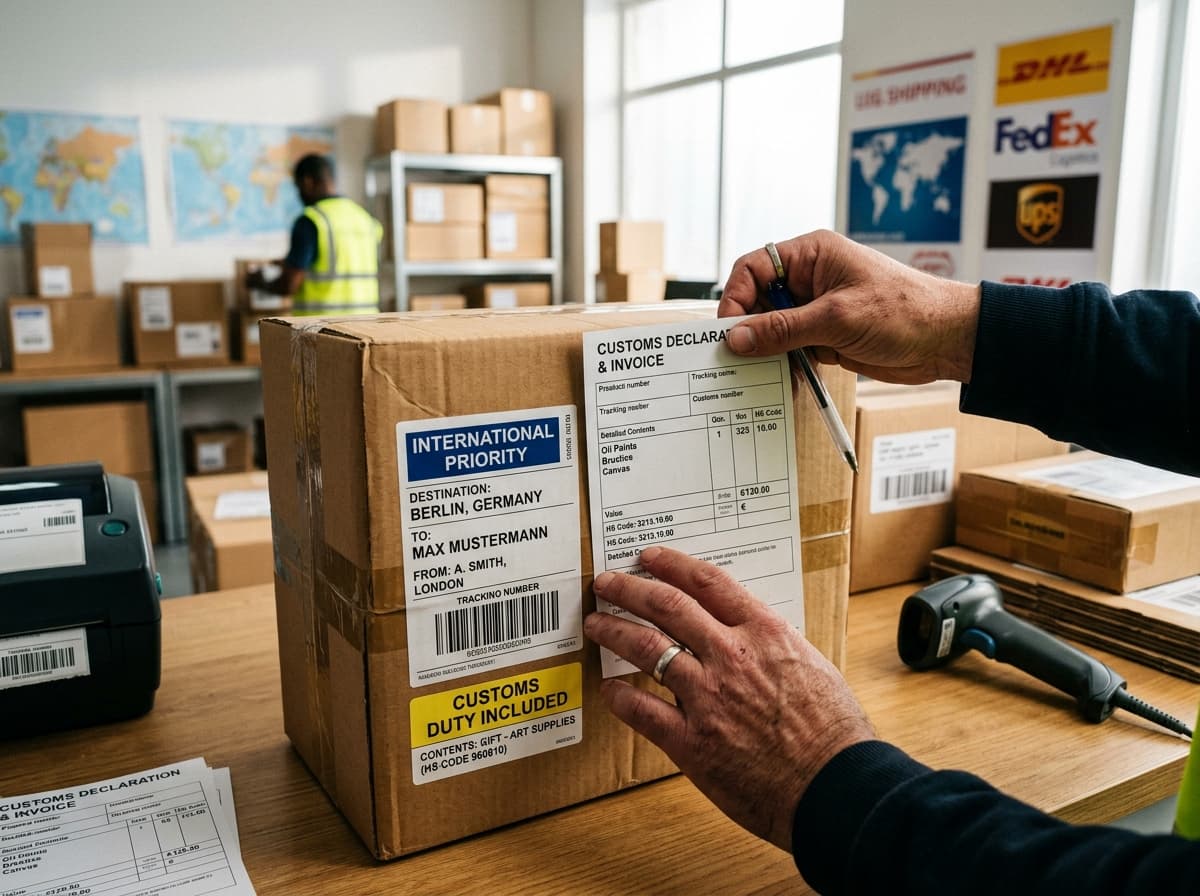
Nearly every customs delay is decided before the parcel leaves. By the time it reaches the border, the declaration is written, the value is set, and the commodity code is chosen — and those three things determine whether it clears in hours or sits for a fortnight.
That's good news, because it means the delay is largely preventable. Here's what actually moves the odds.
How the decision gets made
Customs systems process most parcels automatically. They read the electronic data the carrier submitted, compare it against risk rules, and either release the parcel or flag it.
A flag means human attention, and human attention means a queue. The queue is where the time goes — not the inspection, which usually takes minutes once someone reaches it.
So the goal isn't to be inspected quickly. It's to not be flagged at all.
Quick fact: in most developed markets, well over 90% of low-value parcels clear automatically. The delays people talk about are concentrated in the small minority that get pulled aside.
1. Describe the contents specifically
The single highest-impact change, and the one senders get wrong most often.
"Gift," "sample," "goods," "personal items" and "merchandise" are not descriptions. They tell customs nothing, so the parcel goes to manual review by default.
A useful description names the item, the material and the purpose: "Cotton t-shirt, men's, 2 pieces" rather than "clothes." "Ceramic coffee mug, 1 piece" rather than "kitchenware."
The rule of thumb: could an officer who has never seen the parcel work out what's inside and roughly what it's worth? If not, rewrite it.
2. Declare the real value
Undervaluation is the second big cause, and it's usually well-meant. A seller offers to declare $20 on a $200 item so you avoid duty.
It doesn't work. Customs systems hold reference data on what things actually sell for, and a phone declared at $15 is an obvious anomaly. Anomalies get flagged, and flagged parcels wait one to three weeks.
If the undervaluation is clear, customs can reassess at the value they believe correct and charge duty on that — sometimes with a penalty. And the insurance is capped at the declared figure, so a $400 laptop declared at $20 is worth $20 if it disappears.
The saving is small, the delay is large, and the risk sits with the recipient rather than the seller. Our guide on customs duties works through the actual numbers.
3. Use the right commodity code
Every product has an international classification code that sets its duty rate. The sender chooses it, and a wrong choice causes two problems: the wrong rate, and a mismatch between the code and the description that flags the parcel.
Codes are published by every customs authority and searchable by product name. Getting within the right category is usually enough — the goal is consistency between what the code says and what the description says.
For commercial shipments this matters enough to be worth checking properly. For a single gift, an accurate description does most of the work.
4. Ship DDP if the timing matters
This is the choice that removes the most common long hold entirely.
DDP — Delivered Duty Paid means the sender pays duty and tax in advance. The parcel clears without anyone contacting the recipient, and there's no payment to chase.
DAP or DDU means the recipient gets a bill on arrival, and the parcel waits until it's paid. That notification fails constantly — it lands in spam, or goes to an email the seller supplied, or arrives as a text that looks exactly like a scam.
Meanwhile the parcel sits, and carriers return unpaid parcels after 21 to 30 days.
DDP costs more at the point of shipping. It buys a clearance path with no human in it.
5. Check the restricted list before you buy
Rules vary far more between countries than people expect, and the surprises cluster in a few categories.
Lithium batteries — anything with a rechargeable battery has air transport restrictions, and loose batteries are banned outright on most services.
Perfume, aerosols, nail polish — classed as flammable and prohibited from air mail almost everywhere.
Food, seeds, plants — biosecurity rules are strict and enforcement is real, particularly in Australia and New Zealand.
Supplements, cosmetics, medicines — frequently need registration or a licence, even when they're ordinary retail items at home.
Knives and tools — restricted in several markets regardless of purpose.
A parcel on a prohibited list isn't delayed; it's seized or returned. Five minutes checking before ordering avoids the whole category.
6. Include a phone number and email
Carriers need to reach the recipient for two things: customs charges and delivery exceptions.
An order placed without a phone number is one where nobody can contact you when a decision is needed. The parcel waits, the storage clock runs, and the first you hear is a return notification.
This is a one-field fix and it prevents a disproportionate share of long holds.
7. Get the paperwork right for commercial shipments
Personal parcels need a description and a value. Commercial ones need more, and missing documents mean the carrier has to chase the sender, which adds 5 to 15 working days.
The usual set is a commercial invoice with itemised contents, values and terms; sometimes a certificate of origin where a trade agreement affects the rate; and occasionally a licence for the product category.
If you're importing for a business, an importer registration number is generally required too. Shipping commercial volume without one causes delays that are entirely avoidable.
8. Avoid the peak windows if you can
Customs queues are seasonal, and the calendar is predictable.
Mid-November to early January is the heaviest stretch, with Black Friday, Singles Day and Christmas volume arriving together. A five-day clearance can become three weeks.
Late January to February brings the Lunar New Year effect — Chinese factories and logistics networks close for two to three weeks, and the surge dispatched just before the shutdown lands at destination customs all at once.
Local public holidays matter too. Customs offices close, and a three-day holiday can add a working week once the backlog clears.
If a parcel has to arrive by a date in these windows, add two weeks to whatever the seller quoted.
9. Split high-value orders carefully
A legitimate technique, with a caveat.
If an order crosses your country's duty threshold, splitting it into two shipments on different dates can keep both below it. That's ordinary planning, and plenty of sellers offer it.
The caveat: splitting a single order into multiple parcels dispatched on the same day, to the same address, is visible to customs and is treated as one consignment. Doing it deliberately to evade duty is a different thing from ordering twice a month apart.
What senders control that buyers cannot
Splitting the responsibility makes it clearer where to push when something goes wrong.
Only the sender can write the description, set the declared value, choose the commodity code, pick DDP or DAP, attach a commercial invoice, and resubmit a corrected declaration. Every one of those is fixed before the parcel moves.
Only the buyer can supply a complete address and phone number, pay an outstanding charge, and respond to a request for information about intended use.
Neither can speed up a queue, influence an inspection, or persuade a customs officer to prioritise a parcel.
That split explains a common frustration. A buyer chasing a carrier about a badly declared parcel is pushing on the one lever nobody in the conversation controls. The correction has to come from the sender, and the useful message is to them.
What actually happens inside the border
Knowing the sequence explains why some of the advice above matters so much more than the rest.
Electronic pre-arrival data. Long before the aircraft lands, the carrier transmits a manifest — descriptions, values, codes, senders, recipients. Customs risk-assesses the whole consignment from that data alone.
Automated release or flag. Parcels that pass the rules are cleared before they physically arrive. This is why a well-declared parcel can be delivered the day after it lands.
Manual review queue. Flagged parcels wait for an officer. This is where days become weeks, and it is entirely a queueing problem rather than an inspection one.
Physical examination, sometimes. Most reviews are resolved on paperwork. Only a small share are opened, and an opened parcel is resealed with official tape and a notice inside.
Charge assessment. If duty or tax is owed, the carrier is billed and passes it to the recipient.
The whole point of accurate declarations is to be resolved at step two rather than step three. Nothing you do after the parcel arrives moves it out of the queue faster.
Bonded warehouses and why nobody can help
While a parcel is at customs it sits in a bonded facility — legally not yet in the country, even though it is physically inside the border.
That status is why the carrier's call centre cannot help. They see the same tracking page you do. They cannot walk into the bonded area, cannot ask an officer to prioritise anything, and cannot give a release date. The facility is under customs control.
It also explains the silence. Movements inside a bonded warehouse are recorded for customs rather than for the carrier's public feed, so there is genuinely nothing to publish.
The one lever that reaches inside is money. A parcel held for an unpaid charge is released automatically when payment clears, with no human decision involved.
What to do when it's already stuck
If the parcel is already at the border, the options narrow considerably.
Check for an unpaid charge first. Go to the carrier's own import charges page and enter the tracking number — never click a link in an SMS, because scam versions of those messages are common. This resolves a large share of "stuck" parcels in two minutes.
Supply anything the carrier asked for. Most have a self-service form for adding a description or value.
Ask the sender to correct their declaration. Only they can resubmit.
What doesn't work is contacting the customs agency directly. They handle policy and enforcement, not individual parcel queries, and will redirect you to the carrier. Our guide on parcels stuck in customs covers the four reasons a parcel sits and which one you can act on.
Why the same parcel behaves differently by country
Two identical shipments sent to two countries can produce completely different outcomes, and it is worth knowing why before blaming a carrier.
Thresholds differ. A $40 order that clears untouched in one market triggers a bill in the next, purely because the de minimis value is set lower.
Restricted lists differ. A supplement sold in any supermarket at home may need an import licence elsewhere. Biosecurity rules in Australia and New Zealand are among the strictest anywhere, and food or plant material is routinely destroyed rather than returned.
Processing capacity differs. Some agencies clear low-value e-commerce almost entirely automatically. Others still handle a meaningful share manually, which turns a five-day queue into a three-week one at peak.
Enforcement culture differs. Some markets inspect a small percentage and move on. Others check far more aggressively, particularly on categories with a history of undervaluation.
This is why "how long does customs take" has no single answer, and why advice from someone in a different country can be actively misleading. Check your own market's rules rather than a neighbour's.
The short version for buyers
You control less than the sender, but three things make a real difference.
Buy from sellers who ship DDP on anything valuable or time-critical. Give a phone number and a complete address. And check the restricted list before ordering anything with a battery, a scent, or a shelf life.
Then check the carrier's payment page the moment tracking goes quiet at the border, rather than waiting for a notification that may never reach you. That single habit prevents most of the multi-week holds people describe as customs being slow — when in reality customs was waiting on them.